
Vergangener Start
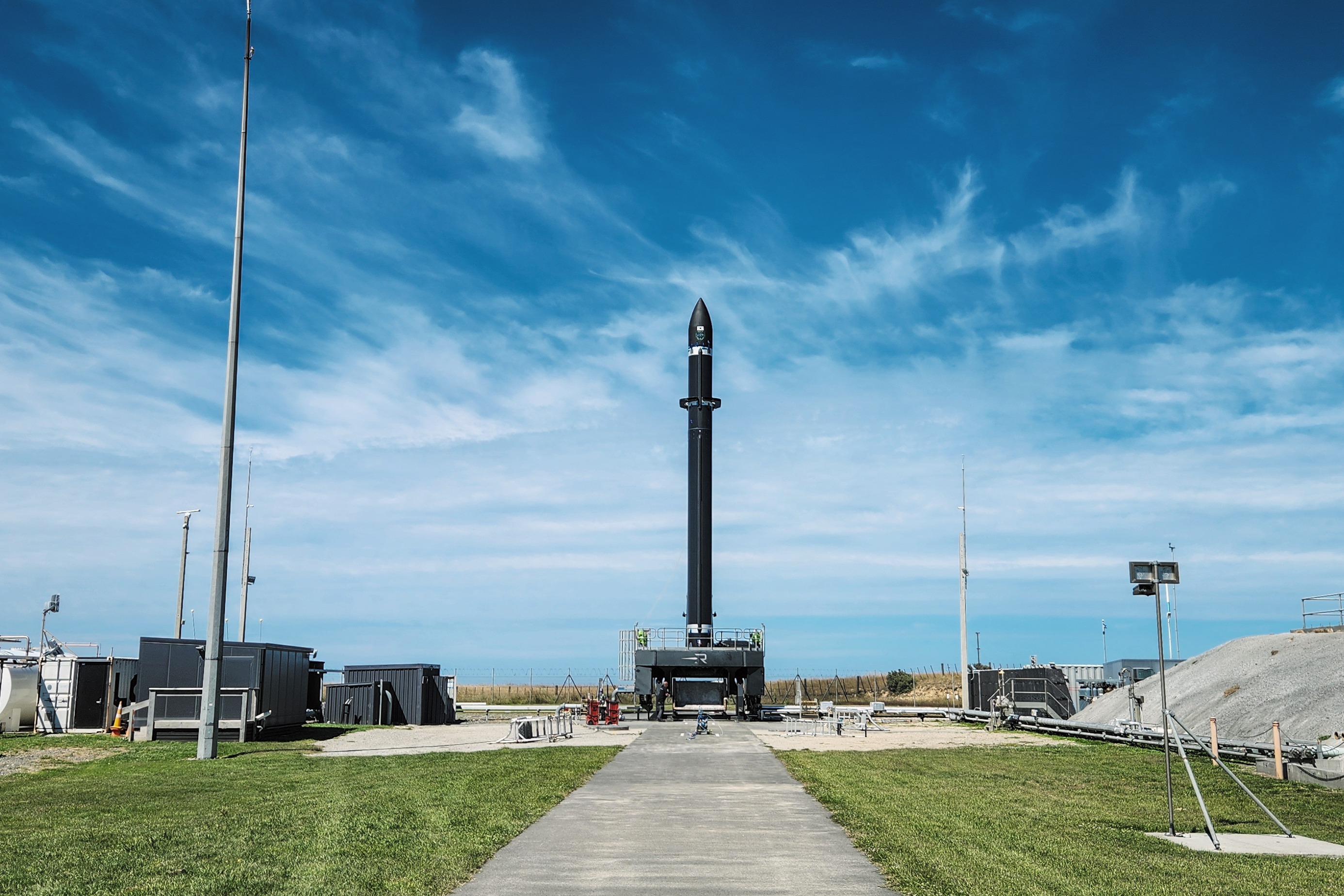
Electron | Bridging The Swarm (NeonSat-1A)
Erfolg 30.01.2026, 14:21 (Ortszeit am Startplatz)
The NeonSat-1A, carrying a high-resolution optical camera, is designed to test the constellation capabilities of the South Korean government's Earth observation micro-satellite constellation NeonSat (New-space Earth Observation Satellite), in particular technology improvements identified from operations of NeonSat-1 after its launch in April 2024. These technologies will in turn be incorporated into the next 10 NeonSat under construction, as well as providing more site re-visiting capabilities along with NeonSat-1. The NeonSat constellation is the first satellite system developed by the government using a mass-production approach for precise monitoring of the Korean Peninsula, lead by the Satellite Technology Research Center (SaTReC) at the Korea Advanced Institute of Science and Technology (KAIST), Korea’s leading university dedicated to science and technology. Designed to capture near-real time natural disaster monitoring for the Korean peninsula, KAIST’s NEONSAT constellation is a collaboration across multiple Korean academic, industry, and research institutions, including SaTReC, which is leading the program’s system design and engineering. The NEONSAT program is funded by the Korean government’s Ministry of Science and ICT (MSIT). (Original, deutsche Fassung folgt)
Electron
 Karte laden (OpenStreetMap)
Kartenvorschau: The Space Devs · Interaktive Karte: OpenStreetMap (laedt erst nach Klick)
- 30.01.2026 Start erfolgreich.
- 30.01.2026 Abtrennung des Raumfahrzeugs.
- 30.01.2026 Der offizielle Livestream von Rocket Lab hat begonnen.
- 30.01.2026 Abheben.
- 30.01.2026 Neue T-0-Zeit.
- 30.01.2026 Hold at T-08:59. (Original, deutsche Fassung folgt)
- 30.01.2026 Startwetter aktualisiert, 70 % GO.
- 29.01.2026 GO für den Start.
Quelle: Launch Library 2 (The Space Devs)
← Zurueck zum Startkalender · Zum Archiv